Dr Kristopher Lovell

“History doesn't repeat itself, but it does rhyme.” ― Mark Twain

  • Home
  • #RecordCovid19 Project
  • #RecordCovid19 Project Collection
  • Accessibility for Online Courses
  • History Fireside Chats
  • Find us

Fear And Loathing in Las Vegas: A Savage Journey to the Heart of the American Dream by Hunter S. Thompson

Posted by Dr Kristopher Lovell on September 21, 2019
Posted in: Book Reviews. Leave a comment

‘I hate to advocate drugs, alcohol, violence or insanity to anyone, but they’ve always worked for me.’ Hunter S Thompson.

Last week, in preparation for my new MA in Creative Nonfiction, I started to read some of the classic texts that blur the lines between fact and fiction starting of with Hunter S. Thompson’s Fear and Loathing. 

Originally, published in Rolling Stone, it is a story without a clear plot. Thompson’s character Raoul Duke is sent to cover the Mint 400 motorcycle race, accompanied by his attorney Dr Gonzo. This is, however, very much a loose plot with the majority of the story focusing more on characters’ use of recreational drugs from Amyl, ether and mescaline to name a few. Duke and Gonzo’s approach to recreational drugs is far from recreational as they seemingly apply a strong work ethic to achieving and maintaining various highs and lows. Throughout the book, it is purposely difficult to ascertain what is real and what is fictional as we experience the paranoia and paroxysms of Duke and Dr Gonzo as they evade the authorities and blend into Las Vegas society (‘In a closed society where everybody’s guilty, the only crime is getting caught’) all while trying to find the American Dream — a dream that increasingly turns into a nightmarish fever.

Image result for Ralph Steadman art

Ralph Steadman illustrates Fear and Loathing

The main characters are compelling, and remarkably well written, but they are far from likeable which is clearly the point of Thompson’s narrative. These two characters destroy, challenge, belittle and question the ugly side of the American Dream whilst also seemingly embodying the ugly by-products of that very dream themselves, taking advantage of anyone they come across, including a very young, naive artist. There is, despite the thorough unlikability of the characters, perhaps begrudging respect for their talents which are all too elusive for most sober-minded people (‘I went back… where I began to drink heavily, think heavily, and make many heavy notes…’) and some admiration for Duke’s ability to see through the murky mirage of society in Vegas. (Duke notes at one point that Vegas was not a town to do psychedelic drugs in because the ‘[r]eality itself is too twisted’.)

There are some genuinely hilarious bits as well as the enthralling descents into madness. Duke is very aware of his risky lifestyle on the edge, living with the prospect of being gutted by a friend too far gone to the constant strain the drugs place on his heart, which manifests most obviously in prodigious perspiration: ‘My clothes are soaking wet from dawn to dusk. This worried me at first, but when I went to a doctor and described my normal intake of booze, drugs and poison he told me to come back when the sweating stopped.’

Fear and Loathing’s legacy is far-reaching. Although this was not the first case of Gonzo Journalism (nor is it a successful case of gonzo journalism by Thompson’s own admission), it is a key moment in American Literature and one that has had a wide impact on American culture more broadly. It hard, for example, not to see this influence even in things such as Bojack Horseman on a deeper level than just drug use (‘Old elephants limp off to the hills to die; old Americans go out to the highway and drive themselves to death with huge cars’).


Share this:

  • Share on X (Opens in new window) X
  • Share on Facebook (Opens in new window) Facebook
Like Loading...

‘The ‘Common Wealth Circus’: Popular Politics and the Popular Press in Wartime Britain, 1941–1945’

Posted by Dr Kristopher Lovell on September 15, 2017
Posted in: Academic Writing. Leave a comment

This is an Accepted Manuscript of an article published by Taylor & Francis in Media History on 28 July 2017 available at http://www.tandfonline.com/doi/full/10.1080/13688804.2017.1353908

Abstract

The popular press is often seen as the ‘voice of the people’. However, an intensive examination of the Daily Mirror, Daily Mail and Daily Express during the Second World War demonstrates some problems with this claim. In fact, the wartime popular press was uninterested in popular political movements, notably the Common Wealth Party, which had a string of by-election successes in the second half of the war. They only took notice of the organisation after it was electorally successful, and even then, its focus was less on its popular support than on the political elites within the party. This paper discusses the Common Wealth Party’s relationship with the press and the implications this has for our understanding of the way non-mainstream political parties were represented in the wartime popular press. It adds to current scholarship by presenting the first detailed discussion of the Common Wealth Party’s coverage in the British press and widens the debate on the role of the press during the war.


Accepted Manuscript, Lovell, The Common Wealth Circus Popular Politics and the Popular Press in Wartime Britain 1941 1945

Share this:

  • Share on X (Opens in new window) X
  • Share on Facebook (Opens in new window) Facebook
Like Loading...

Milan Kundera’s Ignorance 

Posted by Dr Kristopher Lovell on June 29, 2017
Posted in: Book Reviews. Leave a comment

After my previous few reviews, you will be forgiven for thinking that I don’t allow myself to get immersed in books. I struggled to appreciate the works of Huxley and Wells but this was certainly not the case when it came to Kundera’s Ignorance. In fact, I had to slow myself down so as to avoid reading the whole book in one evening.

This isn’t the first work of his I’ve read. I first fell in love with Kundera’s work after reading The Unbearable Lightness of Being a few years ago and since then I’ve read as much of his work as possible and, without a doubt, he is my favourite author. Explaining my love and fascination with Kundera is difficult. I don’t become immersed in the story, rather the story feels like it envelops me and my life. I remember reading The Unbearable Lightness of Being and feeling genuinely devastated that it ended. I was so engrossed in the book that I couldn’t think further beyond it and I felt a part of that world. After the fate of one of the characters, I was betrayed and enthralled.

For me, Kundera is less about the plot, the characters, or even the story in some ways. It’s about an overwhelming sense of emotions and familiarity. Kundera has a way of expressing himself that is tangible and accessible. It’s historic yet grounded in the present.

Ignorance is a relatively simple novel as far as Kundera goes. It lacks the surrealism and self-reflection of Immortality or The Book of Laughter and Forgetting but it certainly doesn’t lack the depth. Ignorance follows the story of two Czechoslovakian émigrés who return to their country after twenty years abroad. It follows their struggles as Josef and Irena try to reconcile the memory of their homeland with reality. Throughout their journeys, both characters experience ignorance in two forms: the willful ignorance people have about the experiences of émigrés, and their own ignorance. This topic is far from new and Kundera recognises this, comparing the plights and experiences of his own characters with the experience Odysseus had upon returning to Ithaca after the Trojan War  (a journey home which also took roughly 20 years). This story is all the more tragic when one remembers that this experience and its portrayal was real for Kundera who was an exile himself and who as a naturalised Frenchman has struggled with his own “Great Return”.

Ignorance is not my favourite work by Kundera. Perhaps because my only experience vaguely comparable to exile is when I moved from the Fens to Wales… But Ignorance does remind me yet again why Kundera remains my favourite author and an unknown friend. It is a story that’s all too relevant today albeit told from a different part of the world. If you’ve yet to enjoy Kundera’s work, I would strongly recommend it.

Share this:

  • Share on X (Opens in new window) X
  • Share on Facebook (Opens in new window) Facebook
Like Loading...

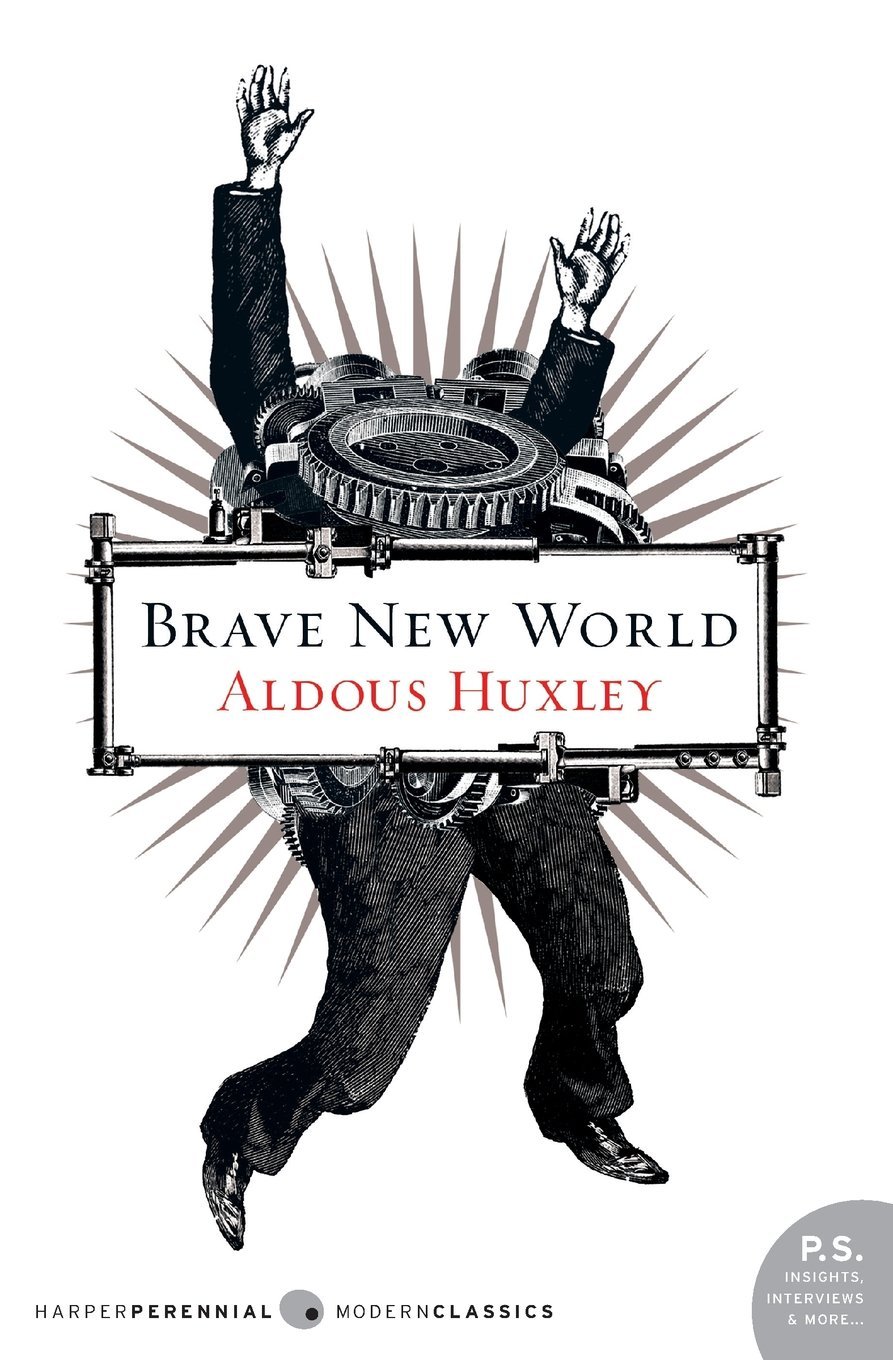
Aldous Huxley’s Brave New World

Posted by Dr Kristopher Lovell on June 25, 2017
Posted in: Book Reviews. Leave a comment

Image result for Huxley's Brave New World


I started reading Brave New World almost immediately after I’d finished The Time Machine and I’m afraid it has taken me this long to finish it. I would like to say that I was too busy with marking and teaching to read the book, but that would be disingenuous. I just didn’t enjoy reading it at all – but I managed to get through it eventually.

For years I’ve been meaning to read Brave New World for two reasons. Firstly, I’m fascinated by books that have been heavily censored or banned and Huxley’s novel has been banned in schools and libraries fairly regularly since it was published in 1932. In fact, according to the American Library Association, Brave New World was the 36th most challenged book between 2000 to 2009 and was in the top ten the following two years. Secondly, I read Orwell’s Nineteen Eighty-Four about a year and a half ago and I was aware that the two works have been frequently compared. I should perhaps caveat this by saying that I didn’t particularly enjoy Nineteen Eighty- Four when I read it – maybe I should have taken that as a sign!

Brave New World shows us a society wherein people are ruled by science, conformity, and most importantly pleasure. Every member of society is conditioned from conception to death. Embryos are (mis-)treated to produce people to suit specific jobs. The Epsilon caste are ‘semi-morons’ bred (in batches of 72 ‘twins’) for menial tasks. The Alphas and Betas are individuals who are spared the Bokanovsky’s Process of creating twins but are still heavily conditioned throughout their lives to serve the more intellectual and creative needs of the World State. The basis of all this is the philosophy of ‘Fordism’: the introduction of mass production into almost all aspects of life to the point that ‘natural’ births are forbidden, parenthood is a profanity and promiscuity is encouraged solely for pleasure.

One key aspect of the conditioning is the enforced addiction to soma. Soma is a drug, granted to citizens as a form of payment, that allows the user to experience a sort of ‘holiday’ from their emotions. Whenever a character is feeling overwhelmed or slightly negative they take a small dose of soma. This emotional manipulation, designed to enforce conformity, is also imposed by the use of the ‘feelies’ – fully immersive movies that allow the viewer to literally feel the emotions expressed on screen.

The novel focuses on Lenina and Bernard and the plot of Brave New World mostly centres around the juxtapositions of conformity/individuality and civilisation/savagery. Lenina is broadly the conformist who accepts the way of the world and Bernard is the social misfit who abhors the promiscuity of his peers and their overreliance on soma. These two characters travel to a Savage Reservation (essentially an area in New Mexico left untouched by Fordism and the World State) for some MacGuffin reason and end up meeting John – a ‘savage’ born of a mother – who returns to the World State with Bernard and Lenina allowing the story to explore and blur these two juxtapositions more. I won’t explain too much of the plot in case of *spoilers*.

What I found difficult about Huxley’s style was first and foremost the weird overuse of the word ‘pneumatic’. Most things were referred to as ‘pneumatic’ at the start of the novel, especially aspects of Lenina’s personality and physique, to the point of semantic satiation. This is a minor issue to have with a novel but it was very prominent and distracting at the beginning. The other main issue I had with the story was there was simply too much detail and scientific jargon in some places (especially concerning Hatcheries and Conditioning) and absolutely none in others (regarding the social experiment in Cyprus for example). To me, this gave the whole novel a very uneven and frequently detached feel to it. This also appeared to affect the novel’s characters. There are (broadly) three main characters but the attention devoted to them is fleeting at times, stubborn at others. Overall, the characters felt all too subservient to the plot.

Despite my reservations, one thing is certainly admirable about Huxley’s work – it remains awfully salient as a prediction of the future. Orwell’s dystopian vision of 1984 receives significantly more attention for its portrayal of a sinister Big Brother state, and whilst that has some relevance to today, Huxley’s is perhaps far more realistic and pertinent albeit more pernicious and subtle.


Share this:

  • Share on X (Opens in new window) X
  • Share on Facebook (Opens in new window) Facebook
Like Loading...

H. G. Wells’ The Time Machine

Posted by Dr Kristopher Lovell on April 20, 2017
Posted in: Book Reviews. Leave a comment

As a major fan of early science fiction, I am ashamed to admit that I had never read The Time Machine before now. To some extent, I guess I did not feel that I had to because I loved the 1960 film with Rod Taylor and Yvette Mimieux so much that I watched it every time it was on TV when I was a child.

Model Lost in Time

Despite my enjoyment of the film I was disappointed to find that I actually struggled to get into the book. Wells published this story in 1895 initially as a serial novel for the New Review. The story is told from the perspective of the narrator recounting a long speech made by the unnamed Time Traveller. For me, this style felt quite laboured. The narrator only provides his own narrative to set up and round off the Time Traveller’s account and it was probably this style that hindered my immersion into the story.

In terms of the plot itself, it differs a lot from the film. The Time Traveller travels to 802,701 AD to find two races descended from humans: the beautiful and aloof Eloi who frolic around the place; and the Morlocks who live in an industrialised underground society and breed the Eloi for food. Throughout the story, the Time Traveller presents the Eloi as the more human of the two races because of their compassion and gentleness. The Morlocks are seen as far less human because of their pale apelike appearance and cannibalistic ways. And yet, the Morlocks are the only creatures who have continued to have a relationship with their machinery and technology. As a child of modern society, I found that this made the Morlocks more relatable and human than the Eloi who had discarded all technology — or perhaps after years locked away in the dark, writing up my thesis I just became more Morlock-like.

The majority of the novel recounts the Time Traveller’s attempts to engage with the Eloi (who take almost no interest in him) and explore the dilapidated, future landscape of London. Towards the middle, the Time Traveller realises that the Morlocks have stolen his Time Machine and the Time Traveller violently and aggressively seeks to get it back. What is interesting about this is that the Time Traveller spent a long time trying to communicate with the Eloi who greeted him by tugging and pulling on his clothes, and yet makes no effort to communicate with the Morlocks who also greet him by tugging and pulling at his clothes but when they start grabbing at him he tries to kill them even before he realises they consume the Eloi.

Morlock Shake

Despite the claustrophobic descriptions of the encounters with the Morlocks underground, I never felt any real sense of danger throughout the novel (the encounters were often over before any real sense of danger emerged) until the end. After wresting the machine back from the Morlocks, the Time Traveller goes a further thirty million years forward in time (which made no sense to me as an escape plan). In the very distant future, Wells presents a subtly terrifying eschatological vision. The Earth appears to have stopped rotating, the sun is an enormous, red and dead presence dominating the sky. The tides have stopped and any trace of civilisation is long gone. Throughout this time I got greatly concerned that the Time Traveller’s lungs were going to explode or that he would suffocate to death. Clearly, I had forgotten that he was telling the story of his past adventures in the present after he had returned largely unscathed from the future. I think.

Whilst I struggled to immerse myself into Wells’ world at the start of the novel, largely because of my own issues with the style of the text, I did become engrossed in the story towards the end. And Wells’ depiction of the future stands out as one that is well-thought-out and has survived the test of time. Wells’ reputation as a visionary of the future is well deserved 122 years in the future because of this. His prose and language are dated, but not so that it is unreadable. There is a nostalgic feel to his writing and that makes for quite a pleasant dichotomy.


Share this:

  • Share on X (Opens in new window) X
  • Share on Facebook (Opens in new window) Facebook
Like Loading...

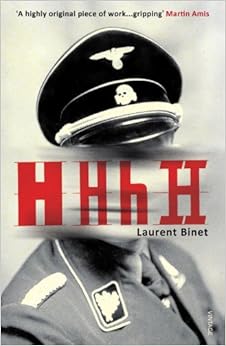
Laurent Binet’s HHhH

Posted by Dr Kristopher Lovell on March 22, 2017
Posted in: Book Reviews. Leave a comment

Image result for hhhh book

HhhH (Himmlers Hirn heißt Heydrich or ‘Himmler’s brain is called Heydrich’) is a book about Reinhard Heydrich and his assassination. Except it isn’t. It is actually a book about writing a book about Reinhard Heydrich and his assassination. Binet, throughout HhhH, provides the reader with a deep background of Reinhard Heydrich, the Butcher of Prague. He provides an account of Heydrich’s upbringing and early career as well as his later successes as one of the most terrifying Nazi leaders. Alongside all this deep and well-researched history, Binet also provides the readers with his own philosophical concerns and personal insecurities ranging from the purpose of writing a novel, to his relationship with his partner and his doubts about his sources.

HhhH is divided up into two very unequal parts. The first part chronicles the background leading up to the assassination of Heydrich. It details the life of Heydrich and the lives of the assassins, Jan Kubiš and Jozef Gabčík. It goes through, in detail, the rise of Heydrich from his days as a young violist and duelist, his dismissal from the navy to his career as a Nazi and Protector of Bohemia and Moravia. Concurrently, Binet also discusses (in far less detail) the lives of Kubiš and Gabčík and the extensive planning that went into Operation Anthropoid. Part one ends with Kubiš and Gabčík ambushing Heydrich’s car and the start of the assassination. The build up to this moment is slow, intense and respectful. Part two (which is only a handful of pages) changes all of this. The tempo in comparison feels out of place. Binet accounts, day-by-day and hour-by-hour, the final moments of Kubiš, Gabčík and their allies and the carefully constructed postmodern novel becomes little more than an action thriller.

Throughout the novel, it is clear that Binet and I share two interests. The first is a historical interest in the Second World War and Reinhard Heydrich in particular. My interest in Heydrich partly stemms from a talk by Robert Gerwarth a few years, during which he provided a rich but very personal account of one of the most dangerous men of the Reich. Gerwarth conveyed the insecurity of Heydrich and the Nazis well, demonstrating how even someone as powerful as Heydrich could not escape or ignore accusations about his past and heritage (even when the head of German counter-intelligence, Heydrich was not above accusations about his Jewish roots). Despite this common interest, Binet tries desperately to make his reader understand that this is not a book about Heydrich but a book about his assassination and ‘one of the greatest acts of resistance in human history’. Unfortunately, Binet does not do this very successfully and for the most part this is a book about Heydrich: neither the book or the author can escape the monster of its own inspiration.

The second common interest is Milan Kundera. Here, I feel the need to confess that Kundera is easily my favourite author. Every book of his I own is dog-eared, covered in pencil marks and annotations. Part of my love for Kundera stems from his ability to express himself on the page, not just as an author but as a part of the work himself: Kundera steps off the ink to reveal himself, to discuss his thought processes with you, and does all of this without compromising the literary presence of his characters. Kundera even when he’s overtly telling you that this is a novel, that his characters are fictional, makes it all feel so much more real. Binet tries to emulate Kundera’s style heavily and he does not hide this. But I fear that Binet is not able to use this style to the same effect. Perhaps this is because Kundera’s stories, although influenced and shaped by history, are his stories. They are his own fictional worlds based around a real world. Binet, however, is telling someone else’s stories and,  for me, it doesn’t quite work. Binet’s attempts to break the fourth wall often raises some awkward questions about its integrity. Binet, for example, criticises and attacks other novels for their inaccuracies, for not being able to substantiate their accounts but he is just as guilty of this throughout. In some cases, I would not have questioned the artistic licence of the author had he not inadvertently made me a few chapters earlier.

However, Binet’s HhhH is still an impressive debut novel and one that I would certainly recommend to anyone interested in Operation Anthropoid, Heydrich, or the Czech Resistance. I would recommend it as a good conventional novel – not as a postmodern one.

Share this:

  • Share on X (Opens in new window) X
  • Share on Facebook (Opens in new window) Facebook
Like Loading...

Off to Fleet Street.

Posted by Dr Kristopher Lovell on July 8, 2014
Posted in: Uncategorized. Leave a comment

Three years have flown past. Very fast indeed.

The Leverhulme Trust project on the A Social and Cultural History of the British Press in World War Two is coming to an end. Today the group is presenting the results of the project to some of the best historians and media historians in their field. And the location could hardly be more apt- Fleet Street in the St Brides institute!

Part of the findings will be from the quantitative coding that Caroline Dale, Marc Wiggam and I worked on for approximately a year. This is where we find out how well such a research method will be accepted for research into the social and cultural history of the press.

Although my contribution has been very limited on the whole, it has been a fantastic project to be part of, and it has been amazing to be part of the brilliant team. With just this symposium and the book to go, wish us luck!!

Share this:

  • Share on X (Opens in new window) X
  • Share on Facebook (Opens in new window) Facebook
Like Loading...

Posts navigation

Newer Entries →
  • RSS History Fireside Chats

    • History Fireside Chats Special: The Christmas Industry
    • History Fireside Chats 9 – The Culture Industry
    • History Fireside Chats: Halloween Special
    • History Fireside Chats 8 – The Medium is the Message
    • History Fireside Chats 7 – Journalism of Attachment: War Reporting During the Bosnian War
    • History Fireside Chats 6 – A Murder a Day: The Brighton Trunk Murders and the British Press
    • History Fireside Chats 5 – Reporting the Spanish Civil War
    • History Fireside Chats 4 – Rosa Luxemburg
    • History Fireside Chats 3 – The Devil’s Decade?
    • History Fireside Chats 2: The Downfall of Chamberlain
  • Recent Posts

    • “And what can life be worth if the first rehearsal for life is life itself?” – Milan Kundera (1929-2023)
    • [RecordCovid19-119] Birmingham, Male, 22
    • History Fireside Chats Special: The Christmas Industry
    • History Fireside Chats 9 – The Culture Industry
    • History Fireside Chats: Halloween Special
  • Recent Comments

    Dana's avatarDana on The Printer
    Dr Jonathan Oates's avatarDr Jonathan Oates on History Fireside Chats 6 – A M…
    Urban Institute's avatarUrban Institute on [RecordCovid19–68] London, Fem…
    Arnold's avatarArnold on Milan Kundera’s The Joke…
    Dr Kristopher Lovell's avatarDr Kristopher Lovell on History Fireside Chats 8…
  • Archives

    • July 2023
    • February 2022
    • December 2021
    • October 2021
    • September 2021
    • August 2021
    • May 2021
    • April 2021
    • February 2021
    • January 2021
    • December 2020
    • November 2020
    • October 2020
    • September 2020
    • August 2020
    • July 2020
    • June 2020
    • May 2020
    • April 2020
    • March 2020
    • February 2020
    • December 2019
    • October 2019
    • September 2019
    • September 2017
    • June 2017
    • April 2017
    • March 2017
    • July 2014
  • Categories

    • #RecordCovid19 Project
    • Academic Writing
    • Book Reviews
    • Creative Writing
    • Fireside Chats
    • Photos
    • Teaching Resources
    • Uncategorized
    • Videos
  • Meta

    • Create account
    • Log in
    • Entries feed
    • Comments feed
    • WordPress.com
Blog at WordPress.com.
Privacy & Cookies: This site uses cookies. By continuing to use this website, you agree to their use.
To find out more, including how to control cookies, see here: Cookie Policy
  • Subscribe Subscribed
    • Dr Kristopher Lovell
    • Already have a WordPress.com account? Log in now.
    • Dr Kristopher Lovell
    • Subscribe Subscribed
    • Sign up
    • Log in
    • Report this content
    • View site in Reader
    • Manage subscriptions
    • Collapse this bar
 

Loading Comments...
 

    %d