Dr Kristopher Lovell

“History doesn't repeat itself, but it does rhyme.” ― Mark Twain

  • Home
  • #RecordCovid19 Project
  • #RecordCovid19 Project Collection
  • Accessibility for Online Courses
  • History Fireside Chats
  • Find us

History Fireside Chats 2: The Downfall of Chamberlain

Posted by Dr Kristopher Lovell on March 3, 2020
Posted in: Fireside Chats. Leave a comment

https://kristopherlovell.com/wp-content/uploads/2020/03/history-fireside-chats-2-downfall-of-chamberlain-final.mp3

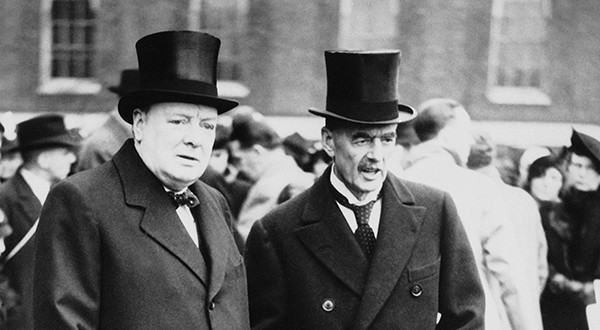
Image result for chamberlain and churchill

Churchill and Chamberlain, 14 March 1935

In this episode of History Fireside Chats, we discuss the Downfall of Chamberlain and the rise of Winston Churchill and we explore how neither was as inevitable as we often think.

As always, this is only a cursory chat. The events preceding the downfall of Chamberlain were incredibly complicated and nuanced. Thankfully, Neville Chamberlain has been the subject of many detailed histories and biographies, and Winston Churchill’s Premiership is one of the most well covered political events in history. There are too many to list but I would recommend the following:

  • Iain Macleod, Neville Chamberlain (London, 1961). A sympathetic, if problematic, account of Chamberlain’s life written by a British Conservative minister that explores in detail Chamberlain’s early reforms.
  • Frank McDonough, Neville Chamberlain, Appeasement and the British Road to War (Manchester, 1998). A classic account of Chamberlain and his political career. It presents a very different view of Chamberlain to Macleod.
  • Peter Neville, Neville Chamberlain: A Study in Failure? (1992). Peter Neville’s book a short but enticing introduction to Chamberlain’s life and is particularly suited for A-Level students. At the end of each chapter, Neville offers a series of exercises designed to explain some of the issues Chamberlain faced.
  • Jonathan Schneer, Ministers at War: Winston Churchill and his War Cabinet (London, 2015). With enviable style, Schneer produces a history of high politics that reads at times like a well-written political thriller and he brings to life many of the rich personalities that clashed so frequently during the war.

Of course, Churchill’s own account of events is worth reading (even if it requires a slight pinch of salt). For his account see his The Second World War: Volume II: Their Finest Hour (1951)

Please excuse the more-than-usual nasally voice which is due to a mild cold. Apologies and I will try to re-record it when when I fully recovered.

History Fireside Chats are produced, recorded and researched by Dr Kristopher Lovell. The audio was recorded using the Samson G-Track Pro: https://amzn.to/2YU2cit

As an Amazon Associate I earn from qualifying purchases

CLick here for Transcript

Share this:

  • Share on X (Opens in new window) X
  • Share on Facebook (Opens in new window) Facebook
Like Loading...

History Fireside Chats 1: Chamberlain and Appeasement

Posted by Dr Kristopher Lovell on February 22, 2020
Posted in: Fireside Chats. Leave a comment
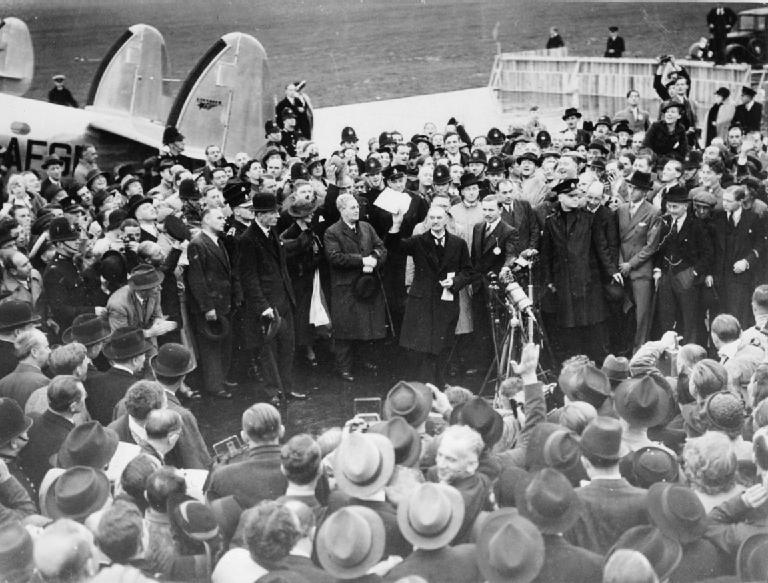
MunichAgreement

Prime Minister Neville Chamberlain declares ‘peace for our time’.
30 September 1938.

This is the first episode in my series of Fireside Chats about history. These chats will focus on C20th British history, conflict reporting and media history. This chat focuses on the history and legacy of appeasement. A controversial and occasionally misunderstood policy.

This is, of course, only a cursory chat. The history of appeasement is rich and there are lots of excellent historical works that discuss the policy in-depth, as well as provide detailed analyses of the Munich Agreement. I personally recommend the excellent works of:

  • The historical roots of appeasement are discussed in great detail by Paul Kennedy in his article: Kennedy, P. (1976). ‘The Tradition of Appeasement in British Foreign Policy 1865-1939’. British Journal of International Studies, 2(3), 195-215.
  • R. Gerald Hughes, The Postwar Legacy of Appeasement British Foreign Policy Since 1945 (2014). This is an excellent discussion of the legacy of appeasement and its use in political rhetoric. Its opening chapters present the historiography of the subject in an enviably clear, concise and engaging manner.
  • D.C. Watt  (1965), ‘Appeasement’, The Political Quarterly, 36: 191-213. (https://doi.org/10.1111/j.1467-923X.1965.tb01099.x). Although this is an older article,  Watt provides a very good introduction to the subject’s historiography and to the history of the policy itself.

This is my first attempt at editing and ‘podcasting’, so it is a little rough around the edges, but hopefully, I will improve as I go on.

History Fireside Chats are produced, recorded and researched by Dr Kristopher Lovell. The audio was recorded using the Samson G-Track Pro: https://amzn.to/2YU2cit

As an Amazon Associate I earn from qualifying purchases


Click for Transcript

Share this:

  • Share on X (Opens in new window) X
  • Share on Facebook (Opens in new window) Facebook
Like Loading...

Portnoy’s Complaint by Philip Roth

Posted by Dr Kristopher Lovell on December 27, 2019
Posted in: Book Reviews. Leave a comment

Image result for portnoy's complaint


I read Philip Roth’s The Professor of Desire earlier in the year and although it is a little impenetrable in places, I found the character and storyline very compelling. Roth’s work struck me as something that would complement my love for Kundera so I brought a couple more of Roth’s books: Portnoy’s Complaint and The Plot Against America. The latter one will take me a bit longer to ingest but Portnoy’s Complaint is a relatively short novel.

The novel is one long monologue by Alexander Portnoy about his sexuality and frustrations in life directed at his psychiatrist. The style can take a while to get used to but it allows Roth to fully flesh out the depravity of his protagonist by giving us an insight into a brutally honest conversation between doctor and patient, one that lacks social propriety. It is more of a confession in places rather than a complaint as Roth details the suffocation he felt as a kid at the hands of his overbearing Jewish parents as he goes through puberty and tries to take hold (literally) of his sexual needs and integrate (seduce) his non-Jewish neighbours.


Image result for philip roth

‘Good Christ, a Jewish man with parents alive is a fifteen year-old boy,
and will remain a fifteen year-old boy till they die’.

For a novel written in 1969, Roth doesn’t hold back. His descriptions of Portnoy’s sexual depravity from puberty to adulthood are very bold and clear. They range from the comical to the disgusting. There’s even a section which seems to be the forefather of American Pie’s infamous apple pie scene. Roth’s novel thus seems to be both indicative of the supposed “sexual revolution” of the time and a trailblazer.

Portnoy talks about how as he grows older his need for sexual gratification grows more and more intense and his actions become increasingly debauched as he encourages his girlfriend into ever more depraved acts for which she starts to resent him. Of course, for the narrator, everyone else is to blame for his sexual and ethical problems: his parents, his girlfriend, his community, society more broadly. Everyone is to blame except Portnoy himself. And that complete self-denial seems to be where the novel works best. Portnoy is a thoroughly unpleasant, difficult character and yet there is something relatable about him. That self-denial, the shifting of blame is something that we are all probably guilty of doing occasionally. Throughout Roth’s novel, Roth shows us a dirty mirror reflecting back society’s hypocrisies and our own flaws. By the end of the novel, I came to realise that it’s not the mirror that’s dirty: it’s our reflections.


Share this:

  • Share on X (Opens in new window) X
  • Share on Facebook (Opens in new window) Facebook
Like Loading...

The Printer

Posted by Dr Kristopher Lovell on October 28, 2019
Posted in: Creative Writing. 1 Comment

In 1439 Johannes Gutenberg brought a revolution to Europe with his printing press. In 1984 Hewlett Packard brought frustration to the world with the desktop printer.

The humble printer sits quietly next to the computer, partially hidden by books and coffee cups, awaiting a chance to bring the printed word to its user. The printer understands that it once had a highly important role in society. It gave birth to knowledge, it brought forth love letters and reconnected family members and forgotten friends divided by the seas. It might have been forgotten, left unplugged but it has never forgotten that it once had this very important job. Unfortunately, the printer is used so infrequently now that it becomes overwhelmed by the pressure of its task: too eager to show off its work, it pushes the paper through too quickly and chokes with performance anxiety.

There are different types of printers but the two most popular are the inkjet and the laser printer. The inkjet is the traditional artist of the printing world, carefully dropping ink on the page to reproduce words and images like an overly precise Georges Seurat; the Laser printer is the makeup artist, with its electrifying personality, delicately powdering the nose of the paper with ink dust before blow drying it set. Whichever printer you use, the result is almost always the same: a frustrated owner scowling at a half printed page or a beautiful vista of splendid colours turned into a faded, streaky, monochromic mess. The owner, who has neglected the printer for months, now awkwardly pulls at random cables, reinserting them and trying in vain to solve the problem but the innocent printer doesn’t realise it has made a mistake. It sees this attention as positive reinforcement for a job done well. When the printer does finally produce the image correctly, it is punished by an owner who quickly tries to hide its shame with coffee cups, books and stray bits of paper: the printer is ignored until next time.

In recent years, scientists have been working hard to ensure that people can feel this sense of exasperation and frustration even when they are on the move. No longer do we need to hide our outrage and anger behind the study’s door: the dye-sublimation compact printer allows you to take your frustrations on your travels with you, instantly turning your holiday pictures into handy postcard-size infuriations.

Share this:

  • Share on X (Opens in new window) X
  • Share on Facebook (Opens in new window) Facebook
Like Loading...

Life is Elsewhere and Festival of Insignificance by Milan Kundera

Posted by Dr Kristopher Lovell on October 7, 2019
Posted in: Book Reviews. Leave a comment

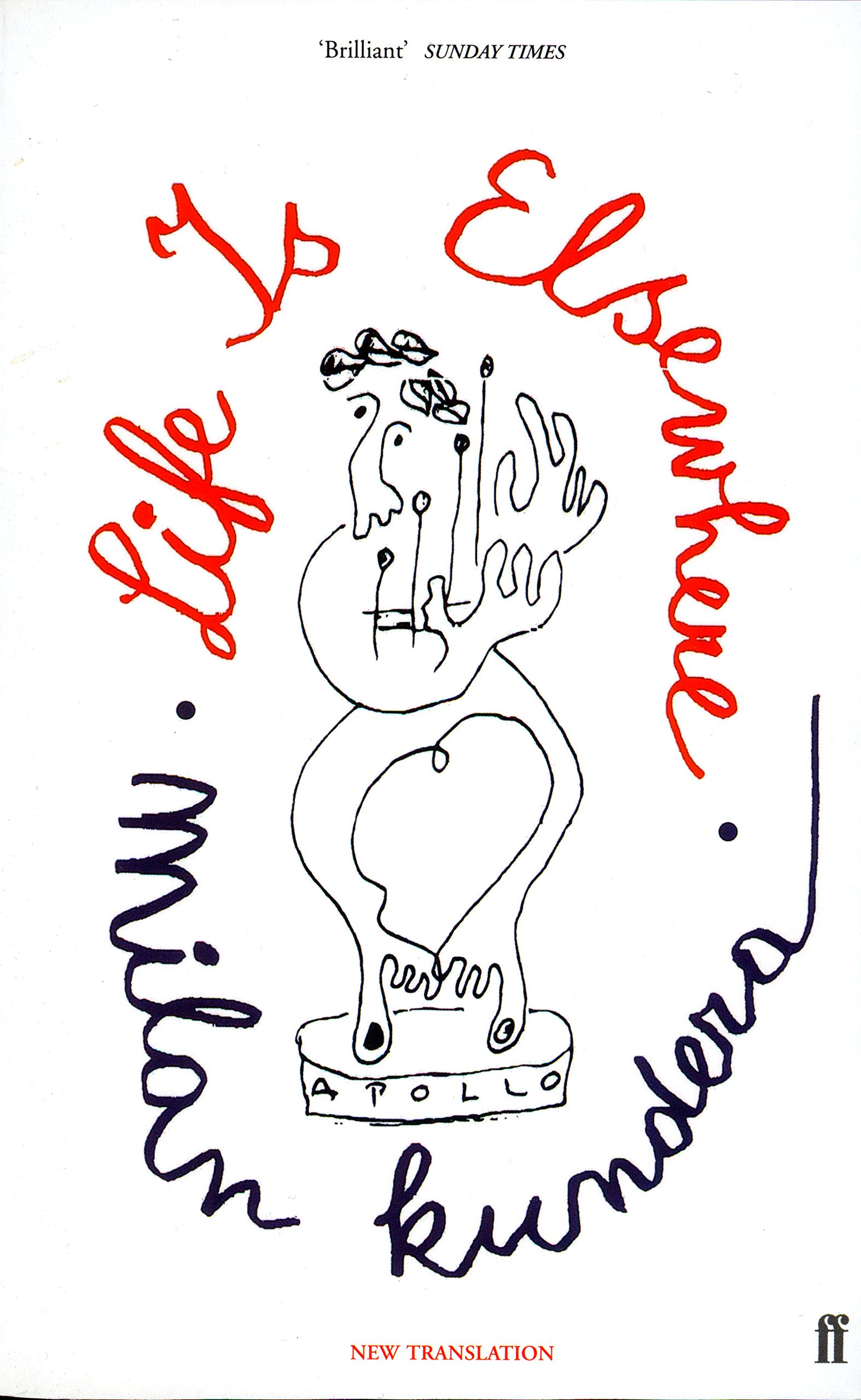
Life is Elsewhere

Image result for life is elsewhere

“Life is like weeds”

Life is Elsewhere is a very (bitter)sweet novel. It traces the tumultuous relationship between Mama and her son, Jaromil. Jaromil is the product of an unhappy relationship between Mama and an engineer who reluctantly becomes a father and husband. Throughout the early years, Mama alternates between her love for her child and resentment over a different future that was lost. She often overcomes this resentment by realising that her life is elsewhere: her beauty fading, her marriage is loveless but through her son she can live. Sometimes.

Kundera makes is absolutely clear that the only character that matters in this story is Jaromil. Most of the other characters are only ever referred to by description: the janitor’s son, the redheaded girlfriend, the painter. This technique reinforces not only the focus of the story but also seems to reinforce Jaromil’s own self-centeredness. Jaromil only cares whether the other characters like, admire or fear him. He doesn’t care about anything else.

Image result for milan kundera

“You think that just because it’s already happened, the past is finished and unchangeable? Oh no, the past is cloaked in multicoloured taffeta and every time we look at it we see a different hue.”

History and memory play an important role in the story, as with all of Kundera’s work. The setting is mid-century Czechoslovakia and Jaromil witnesses the impact the war has on him, his family and friends and how Communist rule changes everything from his relationship with his family, to his friendships and even his poetry. As Jaromil grows up he becomes interested in women (which his mother resents because she feels that any love she has for them takes love away from her). As he sides with the revolution this relationship becomes even more fractious.

Jaromil is a brilliantly precocious poet capable of producing insightful poems from a very young age but he is constantly torn between his overbearing jealous mother, the political status quo and his own desire to write. His more sophisticated poems are often incongruous with the revolution (poems that are a product of bourgeois mentality) yet he latches himself on to the revolution as an opportunity to make a name for himself as a young man. Most of Jaromil’s downfall can be traced to him foolishly striving to be “manly”. It’s interesting to read this in today’s climate when discussions about toxic masculinity are ongoing though I doubt however that Kundera would see this as a part of that dialogue. What the novelist is clear about is that Jaromil’s jealousy, misogyny, arrogance and insecurity have been inspired by real cases. When Jaromil declares that love means ‘all of it means nothing’ and expects the ultimate sacrifice from his girlfriend, this is similar John Keats letter to Fanny Brawne: “You must be mine to die upon the rack if I want you.” Similar references are made to other poets such as Mikhail Lermontov whose ego in real life led to his death in a duel.

Throughout, the story is told from the view of Mama and Jaromil. In the sixth part of the novel Kundera comments how different the story would have been had he placed his writer’s “observatory” in another character’s life or in the future. How would events look if Kundera told us the events from the view of the redheaded girlfriend or the painter? A novel is restricted by its very nature. You can never explore every character, every viewpoint (although it feels like Dostoyevsky often tried his best to). As with Binet’s work I enjoy this approach to story telling. These postulations enhance the novel by giving us an insight into the author. Although I imagine such an approach might be dismissed by some as “post-modern”, damaging to the suspension of disbelief. But what is a novel? As Kundera says:

“Is a novel anything but a trap set for a hero?”

Perhaps the most bittersweet part of this novel is the convincing revelation at the end that life really is elsewhere.

The Festival of Insignificance

Kundera The Festival of Insignificance English Cover.png

The Festival of Insignificance is a very recent novella of Kundera’s, published in English in 2015. It is Kundera’s lightest story and his most light-hearted. It is set in modern day Paris but the setting feels tangential.

It tells the story of a group of friends over seven parts. These are typical Kundera characters: unemployed actors, lotharios and liars, Oedipal artists. But the characters don’t really matter. They are at this point in Kundera’s life just a vehicle for his philosophising which he does on a range of topics from the rise and importance of the naval as a sexual region of the female body to the idea that no one consents to the life they are born into. And no one can consent to ending it without mockery or judgement.

Drawing on some ideas he discusses in his earlier works (Slowness) it also defies time. Alongside the contemporary characters is Stalin and his allies (Beria, Kalinin) who appear in increasingly absurd ways throughout the novella as comic figures. (Kalinin for example cannot go more a few minutes without soiling himself or running to the bathroom). The story ends much like Slowness, as Stalin and Kalinin walk through modern day Paris, mistakenly dismissed as underworked actors. Kundera here seems to be suggesting that the life he lived, the life he suffered through and the tragedies of Stalinism have been forgotten, dismissed by people today as insignificant events of the past.

The biggest philosophical moment comes in the last section with a thesis on insignificance. According to Kundera the most liberating thing in life is that everything is insignificant. Life isn’t elsewhere, it simply doesn’t matter. And Kundera sees a beauty in that.

As with Life is Elsewhere, Kundera explores the concept of observatories of life, positions from which we examine our own lives and each others (see above). However Kundera’s presence as a narrator feels less sublime than it does in other stories. He doesn’t give us any details on characters because they don’t matter for the purpose of this story. He repeats himself openly and his presence feels ubiquitous. The characters discuss Memoirs of Nikita Khrushchev. Why are they reading that? Because their Master told them too.

The role of the narrator is one of my favourite things about Kundera’s work but the Festival of Insignificance is too light a work to bear the heavy weight of its author. Had the story been longer, had Kundera had more chance to flesh out the characters (especially the women who make almost no appearance) then maybe his narrator’s touch would appear less forceful. But then again, I read this knowing it was my last Kundera. Maybe I just wanted a longer story so that I had more Kundera to read

So that’s it. I have now read every novel of Kundera. Not that anyone asked but if I had to rank Kundera in order of preference it would be:

  1. The Book of Laughter and Forgetting
  2. The Unbearable Lightness of Being
  3. Immortality
  4. Identity
  5. Ignorance
  6. Laughable Loves
  7. The Joke
  8. Slowness
  9. Festival of Insignificance
  10. Farewell Waltz

Share this:

  • Share on X (Opens in new window) X
  • Share on Facebook (Opens in new window) Facebook
Like Loading...

Norwegian Wood by Haruki Murakami

Posted by Dr Kristopher Lovell on September 27, 2019
Posted in: Book Reviews. Leave a comment

Image result for norwegian wood

“If you only read the books that everyone else is reading, you can only think what everyone else is thinking.”

I’d never read any Murakami before until a friend recommended this book to me over the summer. Murakami is a Japenese writer but his work is truly international. His work is heavily influenced by his work translating other writers including J D Salinger and Kurt Vonnegut. You can also see the influence of two of my favourite authors: Kafka and Kundera. You can see Kafka’s influence in Murakami’s focus, exploring the self and looking at isolation. In terms of style, Murakami has clearly been influenced by Kundera (a Czech author who was massively influenced by Kafka himself) in his explorations of sex and sexuality as well as themes such as (mis)remembrance and nostalgia.

Norwegian Wood is a story particularly steeped in nostalgia as a middle-aged Toru Watanabe recalls his time as a student in Tokyo in the 1960s. The background is one of revolution, change and consistency. The name of the novel comes from the song by The Beatles, a song that triggers Watanabe’s memory of his student days. The story revolves around love and death. At 17 Watanabe suffers a tragic loss as his best friend Kizuki commits suicide and his death has a profound effect on the protagonist and on Kizuki’s girlfriend, Naoko. The grief they share forces them closer together, spending more time together until eventually they make love in a moment of profound grief and confusion. For Naoko, the confusion is so great that she is forced to retreat to a sanatorium.

Afterwards, Watanabe befriends the aloof and temperamental Midori  — a foil to Naoko. Midori is as outgoing, confident and assured as Naoko is reserved, insecure and confused. A relationship sparks between the two whilst Naoko is away and Watanabe is constantly torn between a relationship with someone emotionally and physically distant but with whom he shares a deep history and connection (Naoko) and one that is immediate, safe and rewarding but new with little foundation (Midori). I shan’t, however, spoil the rest of the story.

Murakami is dealing with difficult subjects, including suicide which he writes about in a very real manner and without judgement. He discusses death and the impact that any death has on the experience of life, on memory and how we think about the dead: “People leave strange little memories of themselves behind when they die.” As someone who is perennially afraid of dying I was surprised to find myself reassured by some of Murakami’s philosophising. He reflects on the inevitability (and almost the necessity) of death: “Death is not the opposite of life but an innate part of it. By living our lives, we nurture death.”

Murakami’s style is very rich, his use of the first person really pulls you in and even when Watanabe is in ridiculous situations, you feel like you are there quite naturally. If you are a fan of Kafka and Kundera I’d strongly recommend trying Murakami.

Share this:

  • Share on X (Opens in new window) X
  • Share on Facebook (Opens in new window) Facebook
Like Loading...

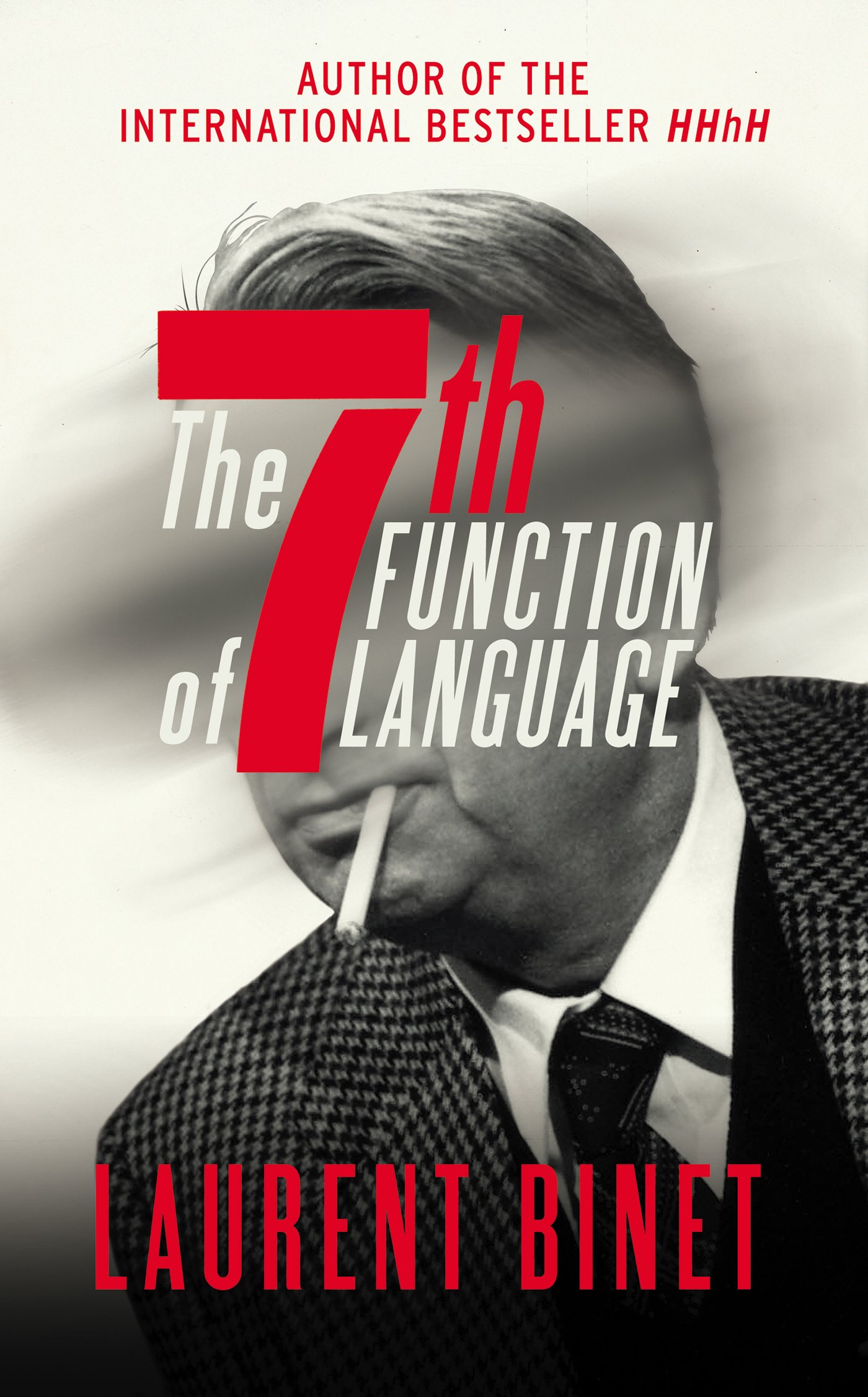
The 7th Function of Language by Laurent Binet

Posted by Dr Kristopher Lovell on September 23, 2019
Posted in: Book Reviews. Leave a comment

Image result for the 7th function of language wikipedia
‘What is the point of an intellectual if he doesn’t’ intervene in a matter that corresponds precisely to his field of expertise?’

Unlike most of the other stuff I’ve reviewed, this is relatively recent so:

*Spoiler Alert*


It’s February 1980, and the great semiotician and literary theorist Roland Barthes has been knocked down by a laundry van on the streets of Paris. He died a month later from his injuries. History has dismissed this as a tragic accident but in Binet’s novel, Barthes was killed for more sinister reasons: power and control. Barthes has stumbled across the seventh function of language*: the ability of language to control the listener, to enact action. Its political uses are infinite and every major government of the world wants it.  Police Detective Bayard attempts to investigate Barthes death, plunging himself in the murky depths of postmodernism with the help of a young semiotician, Simon.

Simon’s role in the story, at first, is to act as a translator for the detective. He helps explain all the complicated theories to the detective (a proud layperson) and by extension helps explain some of the issues to the reader. He introduces the detective/reader to the key figures of the period from Foucault, Sellers, Kristeva, Derrida, Althusser and Eco. As the story progresses, and we become more comfortable with the settings, Simon becomes the key figure, travelling across the world and risking life and limb in underground duels of rhetoric as they track down Barthes’ murderers and try to prevent the 7th function from falling into the wrong hands. All whilst being chased by mysterious Citroëns and other ghosts of Barthe’s mythologies.

Binet’s novel might be seen as a bit heavy in places but this philosophical depth is not uncommon in French literature. Many of these figures are household names in France. The novelist is clearly well-read and has devoted a lot of time familiarising himself with all the theorists but this is far from a hagiography of postmodern thought. In places, it is a scathing attack on some of the key figures of 1980s postmodernism. It is hard not to see Binet’s disdain for figures such as Philippe Sollers who comes across as rather emasculated.

Binet blends fiction and fact together in a masterful way. (Morris Zapp from Changing Places makes an appearance alongside the real academic figures). Some of the most surprising and unbelieve moments of the book are the ones that are actually seeped in the truth. Enthralled by the quick pace of the narrative, I was shocked when Louis Althusser strangles his wife Hélène Rytmann. Then I remembered this was not an act of fiction, he actually did kill his wife in 1980 (see his autobiography: L’avenir dure longtemps). The result is a thrilling story that even when you know it’s being truthful, you question it. And even when you know it is ficitionial you can’t help but wonder. 


Image result for roland barthes

‘Every man laughs for himself.’

Despite his parodic approach to postmodernism, Binet is wonderfully ludic in his own use of it. We see throughout the book the presence of an author desperate to keep control of a story. If there is a ‘death of the author’, Binet does not go gentle into the night. The presence of the author grows alongside the danger as the story progress. Simon, the young semiotician, increasingly suffers from an existential crisis and starts to wonder if he is just a character in a novel. Does he have control over anything? This existentialism comes to a crescendo at the book’s climax. Simon is stuck in a precarious situation and it looks like his life is over: the story, and consequently the novel, are in fact coming to an end. Throughout the final stages of the novel, you can feel Binet struggling with the decision to either save a character he has grown to love or kill the character and completely finish the story. We get glimpses of Binet’s thought process through Simon’s own thoughts:

‘In his last moments, Simon renews his dialogue with that transcendent authority he used to imagine: if he were in a novel, what narrative economy would require him to die at the end? Simon goes over several narratological reasons, all of which he considers questionable’
[…]
‘He must deal with this hypothetical novelist the way he deals with God: always act as if God did not exist because if God does exist, he is at best a bad novelist who merits neither respect nor obedience. It is never too late to try to change the course of the story.’

Simon’s existential crisis is simultaneously hilarious, tragic and approachable. Aren’t we all just characters in someone else’s novel? Do we have any control over our own stories or are we just forced to go from scene to scene at someone else’s whim? Binet offers us some comfort:

‘And it may well be that the imaginary novelist has not yet made his decision. It may well be that the ending of the story is in the hands of his character, and that that character is me.’


*For anyone who is interested in the other six functions:

  1. referential function
  2. poetic function
  3. emotive function
  4. conative function
  5.  phatic function
  6. multilingual


Share this:

  • Share on X (Opens in new window) X
  • Share on Facebook (Opens in new window) Facebook
Like Loading...

The Dancers: Boris Johnson and Jeremy Corbyn

Posted by Dr Kristopher Lovell on September 22, 2019
Posted in: Book Reviews. Leave a comment

Rereading my notes from Milan Kundera’s Slowness got me thinking about how much of what Kundera discusses seems to apply to politics in Britain today. In Slowness, the fictional historian Pontevin talks at length about his ‘dancer concept.’ According to Pontevin, all politicians are dancers and dancers are often in politics. A dancer is different from a regular politician because a dancer does not seek power but glory:  ‘[H]is desire is not to impose this or that social scheme on the world (he couldn’t care less about that) but to take over the stage so as to beam forth his self’.

To excel at being a dancer you must strive to keep others out of the limelight through ‘moral judo’. You challenge the world to determine who is the most moral and you try to make sure that you are constantly putting your opponent in a morally difficult position. The dancer denounces all secret deals and will lay out his plans openly, publicly whilst trying to trip up his opponent by putting them in a moral quandary loudly and publicly. In Kundera’s example, a dancer surprises his opponent with: ‘Are you prepared right now (as I am) to give up your April salary for the sake of the children of Somalia?’ The opponent has a choice: refuse and discredit themselves as enemies of children or say yes in a way that is personally uneasy and plays out unfavourably in the media.

This got me thinking greatly about the political stage that Boris Johnson and Jeremy Corbyn have been using as a dance mat. Brexit has turned into a moral issue. ‘Will you, Corbyn, honour the results of the referendum?’ He can either refuse and discredit himself the enemy of democracy, or he can say an uneasy “yes” and cease being leader of the opposition (giving up his time on the floor). ‘Will you, Johnson, agree that parliament is sovereign?’ He can either refuse and discredit himself the enemy of parliamentary democracy, or he can say “yes” and risk losing the populist moral high ground. In each case, the purpose of these questions is not about finding the right answers but about keeping the opponent off the stage, confined to the morally inferior backstage.

Corbyn and Johnson are also dancers because for both of them it is seemingly about glory, about maintaining one’s role on the stage and not about imposing their own actual ideas on the world. Corbyn is (and has always been) a eurosceptic. He was openly and publicly anti-Europe in previous decades. He opposed Britain’s entry into the EEC. He opposed the Maastricht and Lisbon Treaties and he supported an earlier referendum on leaving the EU.  Through his quiet inaction during the referendum he remained anti-EU, despite claims to the contrary. He is also forced into morally dubious corners in the House of Commons when he is attacked for not honouring a referendum result he actually supports.

Related image

Johnson’s entire premiership so far has been about dancing on stage, making his opponent defend their moral stance rather than actually imposing his own stance (which I don’t think even he knows). Actually, I think Johnson could be seen as a true dancer. A dancer throughout his whole life and not just during his time in politics. The challenges to Corbyn (‘You great big girl’s blouse’) and the disingenuous actions towards the EU whilst withholding any of his proposals all seem to be attempts to keep himself on the stage. His disappearance act with Prime Minister Xavier Bettel and the protesters in Luxembourg can be seen as a way of making sure that he jealously guards the stage. One that backfired thanks to Bettel’s quickstep.

Image result for boris johnson dancing gif

Of course, it is not just these two. Dancers have been a prominent feature in British (Western) politics for a while since Kundera started writing. Theresa May was Corbyn’s ultimate dance partner, tapping her feet to the Leaver’s tune when for years she had been humming to the Remainer’s. Cameron and Blair are dancers in their own idiosyncratic ways. Aspects of Kundera’s concept seems to apply — however, one aspect that Kundera misjudged is the fact that a dancer doesn’t need to be irreproachable. They just need to loudly pretend they are. And as long as they are pointing at someone else’s moral inferiority we can forgive (or perhaps forget) their past moral transgressions.

I’m not saying there is (this is just pontificating in the dark) but if there is anything to Kundera’s dancer-concept in politics, can someone change the record soon?

Share this:

  • Share on X (Opens in new window) X
  • Share on Facebook (Opens in new window) Facebook
Like Loading...

Milan Kundera’s The Joke, Farewell Waltz, and Slowness

Posted by Dr Kristopher Lovell on September 22, 2019
Posted in: Book Reviews. 1 Comment

(Blondie prepared me for a lot in life, but not Moravian culture.)


The Joke

‘Today history is no more than a thin thread of the remember stretching over an ocean of the forgotten, but times moves on, and an epoch of millennia will come which the inextensible memory of the individual will be unable to encompass; whole centuries and millennia will therefore fall away….”

The Joke is a sort of political revenge story. Although like most of Kundera’s novels, the story revolves around several key characters, the standout one is Ludvik Jahn. Ludvik is a popular and successful student under the communist regime who foolishly writes a joke on a postcard (‘Optimism is the opium of mankind! A healthy spirit stinks of stupidity! Long like Trotsky!’). The party fails to see the humour and he is forced to work in the mines after being thrown out of the party. Ludvik, after a few years, ends up with a good life but he remains bitter towards his former students, especially Pavel, who was instrumental in expelling Ludvik from the Party. To get revenge for an act that occurred a lifetime ago, Ludvik seeks to seduce Pavel’s wife: Helena. Helena is by far the most sympathetic character. She is a largely innocent victim of Ludvik’s machinations and the literal butt of the biggest joke in the book. She is seduced by Ludvik and unloved by her husband. It’s easy to dislike Ludivk and everything that he does in his pursuit of revenge, especially his approach to sex, but it is also hard not to see most of our own impulses and paranoias in Ludvik and his actions. He serves as Kundera’s warning to us all about cosmic humour. The central plot reminded me a lot of Voltaire’s line:

‘God is a comedian playing to an audience that is too afraid to laugh.’

The most interesting part of The Joke for me was actually Kundera’s stuff on history and folklore. The secondary plot focus on the Ride of the Kings and Moravian culture. Here, I think Kundera excels and is in his element as he weaves lighthearted philosophising in between the ‘love’ story. The technical discussions about Moravian music can be a little difficult to follow, especially for someone whose musical knowledge is limited to 1980s pop music. (Blondie prepared me for a lot in life, but not Moravian culture.)

Overall, The Joke is an interesting novel and it is easy to see how many of the themes in this story merged with his other books to form the foundation of The Unbearable Lightness of Being. It is perhaps because I started my Kundera journey with his chef-d’œuvre that I don’t quite appreciate the nuance of his earlier works.

SlownessKundera.jpg

“They are gazing at God’s windows. A person gazing at God’s windows is not bored: he is happy”

Slowness

Slowness takes place on two midsummer evenings, two hundred years apart. The plot focuses on five characters, including the author himself who appears at the start. (I do have to confess, although it is a little ‘post-y’, I do like it when authors include themselves into the novels.) Set in a chateau, the story traces the seductive dance between Madame T. and the Chevalier in the eighteenth century and two stories of seduction in the present involving Berck (a dancer), Vincent (a friend of the author) and two women they meet at the chateau. It is less a novel really and more of a philosophical essay, one that explores the relationship between speed, memory and love. One simple (but interesting) discussion explores the fact that we walk slowly if we want to remember something but if we want to forget what has just happened we tend to quicken our pace:

‘There is a secret one between slowness and memory, between speed and forgetting… the degree of slowness is directly proportional to the intensity of memory, the degree of speech is directly proportional to the intensity of fogetting’.

These narratives are underpinned by Kundera’s exploration of speed, history and memory which all serve as a warning to the reader to avoid the modern pressures to be hasty in modern life and to embrace slowness.

The other major theme in Kundera’s novel is the concept of the ‘dancer.’ All politicians have a dancer in them, we are told, because they seek glory not power; they desire to ‘take over the stage so as to beam forth his self’ rather than actually enact ideas. (It is hard not to see a bit of a ‘dancer’ in Boris Johnson.) To dominate the stage, politicians need to make sure no one else is on the stage by ensuring their opponents are seen as morally inferior.

Slowness is one of Kundera’s shortest novels, but it is also one of his most detailed and dense stories. It is written in a style that transcends and complicates time, which can be a little confusing in places but there is something immensely sweet about Slowness. 

 

Image result for farewell waltz

Farewell Waltz 

I love Kundera, but I do not like this story. Set in a spa town in Czechoslovakia, it centres around sex and love. Not uncommon in a Kundera story, but there is a much darker and misogynist tone than normal in this story.

Klima is a famous musician with a remarkably beautiful wife (Kamila). However he is prone to having numerous affairs, and one such affair ended with Klima impregnating a nurse at the spa (Ruzena). The story focuses on Klima’s attempts to convince Ruzena to get an abortion, an act that requires permission from the Board. In order to convince Ruzena to get an abortion, Klima has to promise her that he will leave his wife for her, which he has no intention of doing as he is greatly in love with Kamila (who has decided to visit the spa in order to catch Klima out). This is pretty standard stuff for Kundera.

But the two secondary plots are more extreme than normal. The gynaecologist at the spa helps couples who are struggling to have children. He doesn’t help by normal medical practices: he impregnates the women without their knowledge so that the vast majority of children at the local school share a considerable physical resemblance to the gynaecologist… Horrific.

Yet that’s not even the worse bit. One character Jakub visits the spa before he leaves the country. He wants to thank the gynaecologist for giving him a suicide pill to use if his days as a political exile got too dark. He carries this pill with him everywhere, concealed in a loose handkerchief. Whilst he is at the spa he sleeps with the daughter of the man he betrayed years ago by pretending that he was his best friend. In the restaurant, Ruzena the pregnant nurse leaves a tube of her anxiety pills on the table. Jakub and his “friend’s” daughter sit down to eat at the table she has vacated and Jakub sees the pills. He notes that they are the same colour and shape as his suicide pill, so (naturally) he puts the pill into the tube. When the nurse comes back and picks up her pills, he doesn’t tell her that she now has a suicide pill in the mix. For the rest of the novel, he has countless chances to tell her that her life is at risk but in the end he decides to drive away and flee the country, comforting himself with the thought that he’ll never know whether he is a murderer or not. Ruzena, who is rather naturally anxious about everything that is going on at the spa, takes the suicide pill by accident and dies a quick but painful death. This conveniently solves Klima’s quandary and Ruzena’s death is glossed over by the other characters in a callous fashion.

Kunder’s treatment of women has often been problematic, to say the least. A lot of time it seems that the misogyny is less Kundera’s and more his characters’. That is to say, that Kundera paints a character that is misogynistic, one who is indicative of how a lot of men think. But this story treats women as wholly expendable. The misogyny is not an insight into a character’s psyche (and by extension society’s) but is just gratuitous.

My Kundera journey is nearly complete. I now only have one more novel of his to read: Life Is Elsewhere.
 

Share this:

  • Share on X (Opens in new window) X
  • Share on Facebook (Opens in new window) Facebook
Like Loading...

The Machine Stops by E. M. Forster

Posted by Dr Kristopher Lovell on September 21, 2019
Posted in: Book Reviews. Leave a comment

Image result for the machine stops

Anyone who knows me knows that I am an avid fan of horror and gothic literature. All types really: I’ve read the complete works of Lovecraft, a lot of Stephen King, Clive Barker and I even enjoyed a fair few Dean Koontz novels in my youth. That means it takes a lot for a story to have much of an effect on me. Most of the time I appreciate the writing and the story, but they very rarely scare me. Forster’s novella The Machine Stops (1909), which is a science fiction story and not a horror, freaked the crap out of me. 

At just over 12,000 words Forster paints, in enviable prose, a vision of the future in which humanity has been forced to live underground. Everyone lives in small individual hubs, similar to a cubicle but one in which all our needs are met by a machine. If you want food, it delivers food; if you want some music, it will play something you want; if you need some poetry, the machine delivers. It is even equipped with a sophisticated version of Skype and has the ability to repair itself.

The main character Vashti is very content, happy with everything the machine provides her with and happily delivering lectures on ‘secondhand ideas’ to likeminded people across the world (I agree!). Her son, Kuno, however, is disillusioned with the mechanical world and distrustful of the machine. He manages to get Vashti to travel across the world to see him instead of relying on Skype. When she arrives Kuno reveals to his mother that he is rebelling against the modern world and seeks to explore the surface of the Earth which is now a toxic wasteland. He explains that he managed to break out of the ventilation system (seemingly putting everyone at risk) and briefly sees some evidence of life surviving on the surface beyond the reach of the machine. Kuno’s rebellion sees him threatened with exile from the council and his relationship with his mother is strained more than ever.

Vashti returns home and over the years the omnipotent Machine comes to be seen as a god as society shifts towards a ‘technopoly’. The Machine is now revered and humanity is willing to sacrifice aspects of society in favour of the Machine. But, as the title foretells, one day the machine’s ability to repair itself breaks down and no one can remember how to fix it. We see, through Forster’s words, a sort of mechanical stroke in action as different aspects of the machine starts to break down. The Machine begins, for example, to omit key sections from its music and its poetry become garbled and confused. The ventilation system breaks down. As the Machine crumbles, humanity crumbles. The Machine simply stops, and so do we. The story ends in a dark tunnel that is full of putrid, foul air. The story ends quickly, but not quick enough:

‘Only the whispers remained, and the little whimpering groans. They were dying by hundreds out in the dark.
She burst into tears.
Tears answered her.
They wept for humanity, those two, not for themselves. They could not bear that this should be the end’

Maybe it was because I read the story in the dark, but that final image of hundreds of people gasping for air, trapped underground, struggling to breathe and dying without any control or chance for escape…

This story was inspired a little by The Time Machine by H. G. Wells (see earlier review) which is fairly evident, but the story is also terrifyingly prescient. Not only does Forster predict a lot of the technology that we rely on, including the very medium which I am communicating right now, but he also seems to predict the social issues that come with this technology. I rarely communicate with anyone in person outside of work, preferring to use Skype or instant messenger. I don’t know how most of the technology I use actually works – it just does. As we rely increasingly on technology to supply most of our needs, what would happen if it simply stops?

But perhaps the most terrifying aspect of Forster’s work lies in his description of an Earth stripped of resources: barren and lifeless. In 1909, he seems to predict the devastating effect humankind will have on the world, the effects of climate change.

‘But Humanity, in its desire for comfort, had over-reached itself. It had exploited the riches of nature too far. Quietly and complacently, it was sinking into decadence, and progress had come to mean the progress of the Machine.’

Perhaps what makes Forster’s novel so terrifying compared to the cosmic horror of Lovecraft or the supernatural stories of King is the fact that I’m in this nightmare.

Share this:

  • Share on X (Opens in new window) X
  • Share on Facebook (Opens in new window) Facebook
Like Loading...

Posts navigation

← Older Entries
Newer Entries →
  • RSS History Fireside Chats

    • History Fireside Chats Special: The Christmas Industry
    • History Fireside Chats 9 – The Culture Industry
    • History Fireside Chats: Halloween Special
    • History Fireside Chats 8 – The Medium is the Message
    • History Fireside Chats 7 – Journalism of Attachment: War Reporting During the Bosnian War
    • History Fireside Chats 6 – A Murder a Day: The Brighton Trunk Murders and the British Press
    • History Fireside Chats 5 – Reporting the Spanish Civil War
    • History Fireside Chats 4 – Rosa Luxemburg
    • History Fireside Chats 3 – The Devil’s Decade?
    • History Fireside Chats 2: The Downfall of Chamberlain
  • Recent Posts

    • “And what can life be worth if the first rehearsal for life is life itself?” – Milan Kundera (1929-2023)
    • [RecordCovid19-119] Birmingham, Male, 22
    • History Fireside Chats Special: The Christmas Industry
    • History Fireside Chats 9 – The Culture Industry
    • History Fireside Chats: Halloween Special
  • Recent Comments

    Dana's avatarDana on The Printer
    Dr Jonathan Oates's avatarDr Jonathan Oates on History Fireside Chats 6 – A M…
    Urban Institute's avatarUrban Institute on [RecordCovid19–68] London, Fem…
    Arnold's avatarArnold on Milan Kundera’s The Joke…
    Dr Kristopher Lovell's avatarDr Kristopher Lovell on History Fireside Chats 8…
  • Archives

    • July 2023
    • February 2022
    • December 2021
    • October 2021
    • September 2021
    • August 2021
    • May 2021
    • April 2021
    • February 2021
    • January 2021
    • December 2020
    • November 2020
    • October 2020
    • September 2020
    • August 2020
    • July 2020
    • June 2020
    • May 2020
    • April 2020
    • March 2020
    • February 2020
    • December 2019
    • October 2019
    • September 2019
    • September 2017
    • June 2017
    • April 2017
    • March 2017
    • July 2014
  • Categories

    • #RecordCovid19 Project
    • Academic Writing
    • Book Reviews
    • Creative Writing
    • Fireside Chats
    • Photos
    • Teaching Resources
    • Uncategorized
    • Videos
  • Meta

    • Create account
    • Log in
    • Entries feed
    • Comments feed
    • WordPress.com
Blog at WordPress.com.
Dr Kristopher Lovell
Blog at WordPress.com.
Privacy & Cookies: This site uses cookies. By continuing to use this website, you agree to their use.
To find out more, including how to control cookies, see here: Cookie Policy
  • Subscribe Subscribed
    • Dr Kristopher Lovell
    • Already have a WordPress.com account? Log in now.
    • Dr Kristopher Lovell
    • Subscribe Subscribed
    • Sign up
    • Log in
    • Report this content
    • View site in Reader
    • Manage subscriptions
    • Collapse this bar
 

Loading Comments...
 

    %d